


Bio Quantum Academy, Philosophy of Healing, Science of Medicine, Integrative Healthcare, Unani and Ayurvedic Research, Dr. Nayamot Ullah
Introduction: The Dawn of a New Medical Era
The history of medicine has often been a tale of two worlds. On one side stands the ancient “Philosophy of Healing”—a tradition-rich, holistic approach that views the human body as an interconnected system of energies and temperaments. On the other side stands the “Science of Medicine”—the rigorous, evidence-based discipline that has revolutionized surgery, diagnostics, and pharmacology through reductionist analysis.
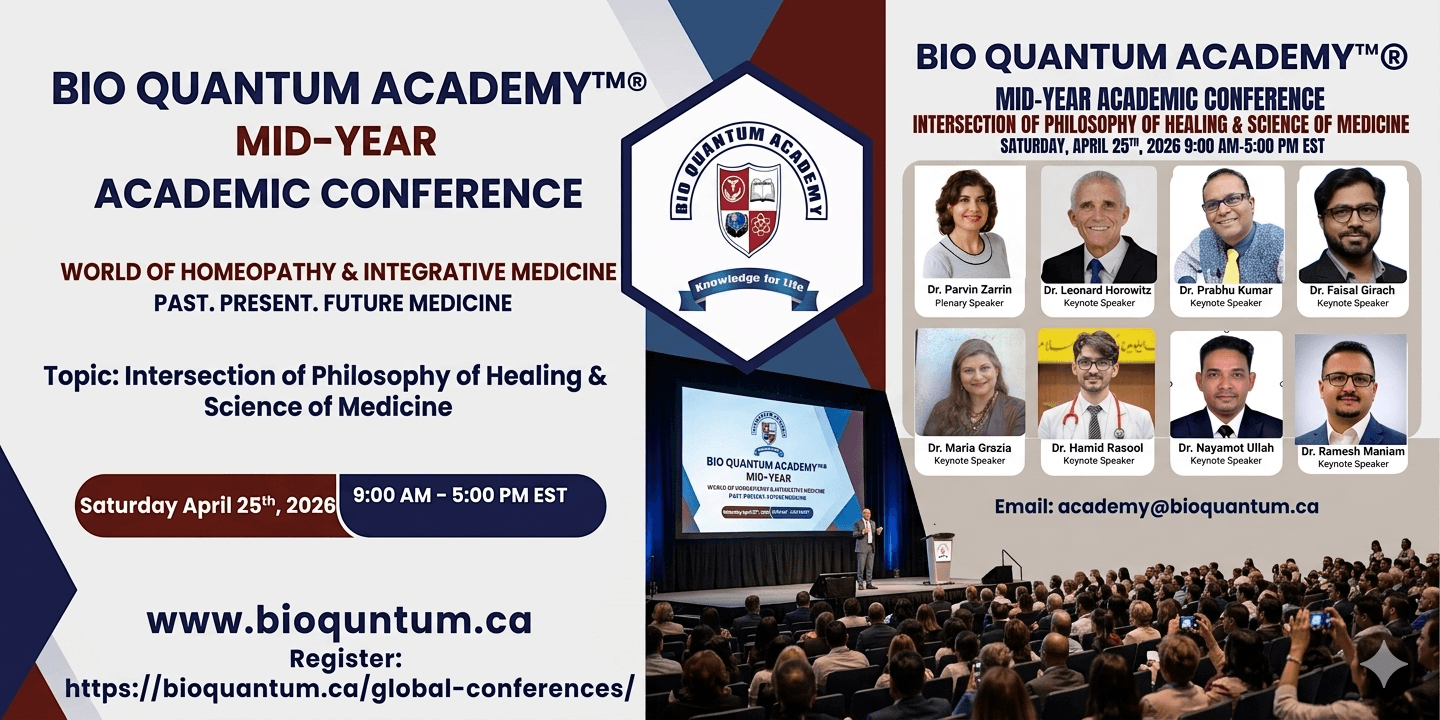
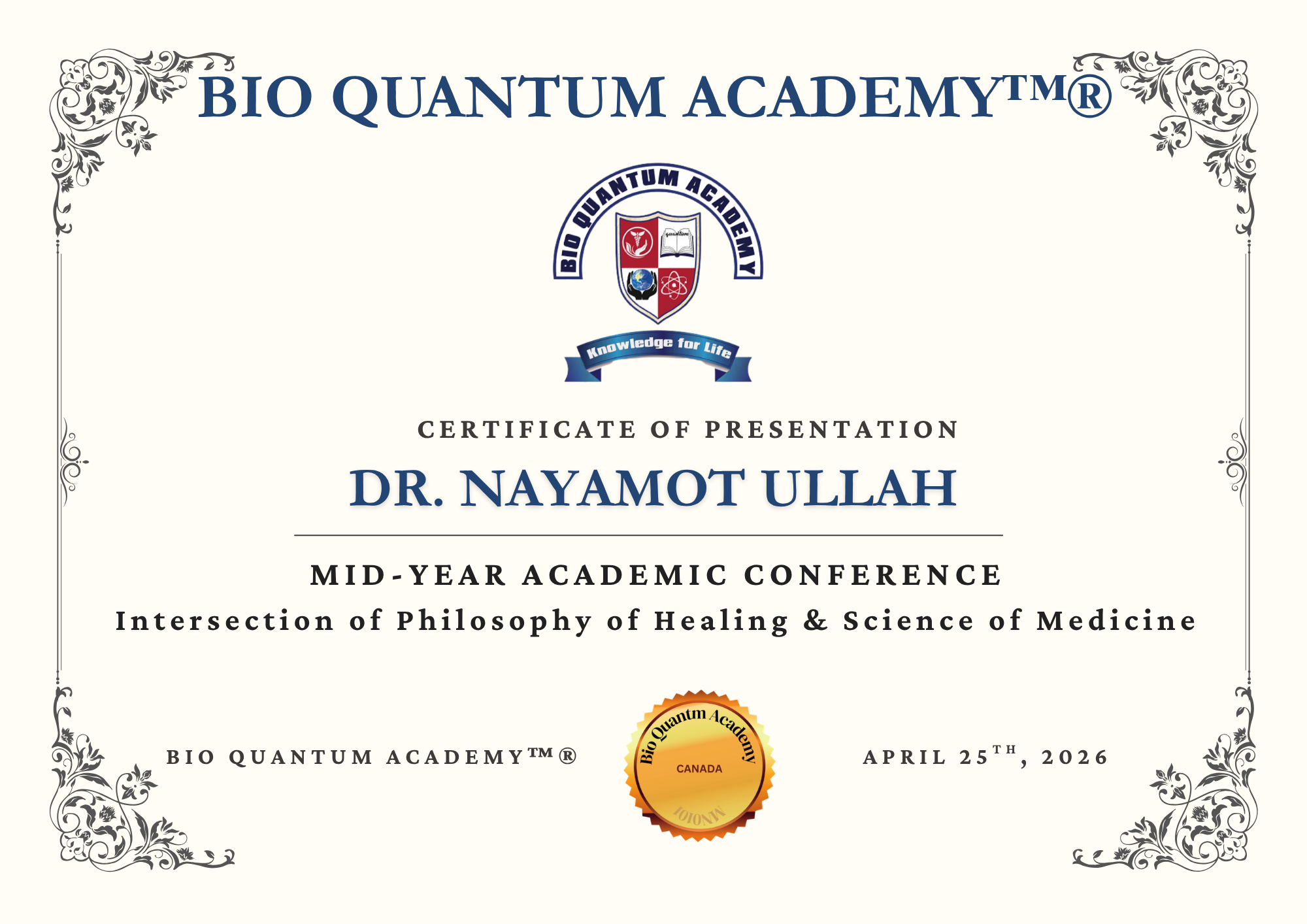
For centuries, these two paths rarely crossed. However, as we move further into the 21st century, the limitations of an exclusively reductionist approach to chronic health have become clear. The world is seeking a “Quantum” shift. This shift was crystallized on April 25, 2026, at the Bio Quantum Academy (BQA) Mid-Year Academic Conference in Canada.
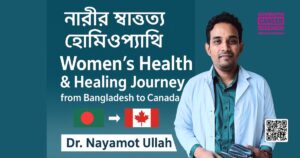
The conference, themed “Intersection of Philosophy of Healing & Science of Medicine,” was not just an academic gathering; it was a proclamation of a medical renaissance. The recognition of Dr. Nayamot Ullah at this forum serves as a bridge, connecting global academic excellence with the grassroots efforts to modernize traditional medicine in South Asia.
Part I: Bio Quantum Academy and the “Knowledge for Life”
The Bio Quantum Academy, based in Canada, has emerged as a leader in the field of integrative health education. Its motto, “Knowledge for Life,” reflects a commitment to understanding health beyond the mere absence of disease.
1. What is Quantum Medicine?
To understand the significance of this conference, one must first understand the “Quantum” aspect. While classical medicine looks at the body as a series of chemical reactions, quantum biology looks at the subatomic level. It posits that biological systems are governed by coherent energy fields and electromagnetic frequencies.
This perspective provides a scientific vocabulary for concepts that were previously labeled as “mystical.” When traditional Unani medicine speaks of Arwah (Vital Spirit) or Ayurveda speaks of Prana, quantum science interprets these as the bio-energetic signatures that coordinate cellular activity.
2. The 2026 Conference Highlights
The Mid-Year Academic Conference brought together researchers from diverse backgrounds to discuss how the “Philosophy of Healing” can be measured and validated through the “Science of Medicine.” Key discussions included:
-
Bio-Resonance and Diagnostics: How the body’s frequency can predict illness before physical symptoms manifest.
-
The Neuro-Philosophy of Healing: Exploring how the mind’s intent and philosophical outlook directly impact biological recovery rates.
-
Integrative Pharmacology: Studying how plant-based compounds from traditional systems interact with the body’s quantum-biological pathways.
The presentation by Dr. Nayamot Ullah at this prestigious event highlighted a critical reality: traditional systems are not “unscientific”; they are simply waiting for a more advanced science—Quantum Science—to explain their mechanisms.
Here are a few options for your reply, ranging from professional to high-energy, so you can choose the one that best fits your style:
Option 1: Professional & Academic
“It was an honor to present my research at the Bio Quantum Academy Mid-Year Academic Conference. The ‘Intersection of Philosophy of Healing & Science of Medicine’ is a vital dialogue for the future of global healthcare. My presentation emphasized that there is no health without mental health, and I am grateful to the Academy for providing a platform that values this holistic integration. Truly a world-class experience in clinical innovation!”
Option 2: Eye-Catching & Impactful
“Bio Quantum Academy is leading a healthcare revolution! 🚀 I was thrilled to share my research on the essential link between mental and physical well-being. Their commitment to transforming medical perspectives is exactly what the global health community needs right now. If you are looking for the cutting edge of medicine and philosophy, this is it! 🌟 #NoHealthWithoutMentalHealth #BioQuantumAcademy”
Option 3: Concise & Supportive
“A fantastic conference! Proud to have contributed my research on the MPTCare model and the critical message that there is no health without mental health. Bio Quantum Academy is a true pioneer in bridging the gap between science and holistic healing. Highly recommended for any researcher looking to make a global impact!”
This video is a compelling look into Dr. Nayamot Ullah’s presentation at the Bio Quantum Academy’s 2026 Mid-Year Conference, where he discusses the intersection of homeopathy, mental health, and the treatment of chronic conditions like melanoma.
Here are a few options for a comment, depending on the tone you want to strike:
Option 1: Professional and Academic (Focused on his research)
“Dr. Nayamot Ullah’s presentation on the MPTCare Model and the role of homeopathy in treating complex cases like melanoma is truly enlightening. It’s inspiring to see such a strong emphasis on the ‘story of the disease’ and the shift toward mental health as a core pillar of clinical recovery in Bangladesh. Essential viewing for anyone interested in integrative oncology and global health policy!”
Option 2: Supportive and Grateful (Focusing on the community)
“Incredible to see the work Dr. Nayamot Ullah is doing in Dhaka. His focus on patient-centered advocacy and affordable care systems is exactly what modern medicine needs. The discussion on how COVID-19 reshaped our understanding of mental health was particularly powerful. Proud to support Bio Quantum Academy’s mission!”
Option 3: Brief and Insightful (Focusing on a specific quote)
“‘There is no health without mental health.’ Dr. Ullah’s segment perfectly bridges the gap between clinical science and medical philosophy. His results with melanoma patients illustrate the potential of a truly holistic, individualized approach to healing. Great session!”
Key Highlights from Dr. Ullah’s Segment (41:20 – 1:04:00):
-
The Post-COVID Shift: He emphasizes that the pandemic highlighted a global crisis in mental health, noting that in Bangladesh alone, 40 million people are facing mental health challenges.
-
The “Story” of Disease: Dr. Ullah argues that every diagnosis has a narrative background—fear, financial crisis, or hopelessness—that must be addressed alongside physical symptoms.
-
MPTCare Model: He introduces the “MPTCare” protocol (Moral, Philosophy, Treatment), which focuses on individualized, cost-effective care and detoxification from over-medication.
-
Melanoma Case Study: He shares a remarkable case of a 42-year-old patient with melanoma of the foot and multiple tumors who saw significant reduction in growth through homeopathic intervention and the restoration of “vital force.”
#NoHealthWithoutMentalHealth or www.bioquantum.ca
Part II: Bridging the Gap in Bangladesh
While the conference in Canada focused on the theoretical and global advancements of integrative medicine, the practical implications are hitting home in Bangladesh.
On April 26, 2026, just one day after the Bio Quantum conference, the Ministry of Health and Family Welfare of Bangladesh issued a historic directive (Memo No. 337). This directive is the institutional realization of the very “Intersection” discussed in Canada.
1. The Alternative Medicine Faculty at BSMMU
The government’s instruction to functionalize the “Alternative Medicine Faculty” at the Bangladesh Medical University (BSMMU/PG Hospital) is a watershed moment. It marks the transition of Unani, Ayurvedic, and Homeopathic medicine from the periphery of the healthcare system to its very core.
2. Research as the Foundation: MD, MPhil, and PhD
By introducing postgraduate courses like MD, MPhil, and PhD in government traditional medical colleges, Bangladesh is following the blueprint of academic excellence seen in Canada. This ensures that:
-
Practitioners are Researchers: Doctors are no longer just dispensers of herbs; they are scientists conducting clinical trials.
-
Standardization: Ancient recipes are being standardized into modern pharmaceutical dosages.
-
Global Credibility: A PhD from a government-recognized faculty gives traditional medicine the “Science of Medicine” credential it needs for global acceptance.
Part III: The Synergy of Science and Tradition
The “Intersection” is where the magic happens. When we combine the depth of traditional philosophy with the precision of modern science, we solve the two greatest problems in modern healthcare: Access and Chronic Wellness.
1. Solving the Access Crisis
Modern pharmaceuticals are often expensive and patented by multinational corporations. By modernizing traditional medicine, Bangladesh can utilize its local botanical resources. This creates a sustainable healthcare model where the “Science of Medicine” is used to ensure the safety and efficacy of “Traditional Philosophy.”
2. Addressing Lifestyle Epidemics
The world is currently facing a crisis of non-communicable diseases (NCDs) like diabetes, hypertension, and autoimmune disorders. Modern medicine is excellent for crisis management (e.g., surgery for a heart attack), but traditional philosophy is superior for Lifestyle Modification.
The “Quantum” approach allows us to see how diet, temperament, and environment affect the body’s energy balance. By integrating these systems, we move from “Sick-care” to “Health-care.”
Part IV: Outreach and the Global Stage
The recognition from Bio Quantum Academy is part of a larger outreach strategy. Active engagement with academic departments in Singapore, Hong Kong, and Japan is essential. These Asian nations have already successfully integrated their traditional systems (like Kampo in Japan or TCM in China) into their national health insurance models.
By participating in Canadian conferences and Asian academic outreach, Bangladeshi practitioners are positioning themselves at the forefront of the Global Integrative Medicine Movement.
Part V: The Role of Advocacy and Professionalism
The progress we see today would not have been possible without the advocacy of organizations like the Unani Ayurvedic Graduate Doctors Association of Bangladesh (AGDAB). Their demand for academic expansion and professional rights provided the political will for the government to act.
It is the combination of Individual Excellence (like Dr. Nayamot Ullah’s presentation in Canada) and Collective Advocacy (like AGDAB’s efforts) that creates lasting change.
Conclusion: A Holistic Future
The events of April 2026—the Bio Quantum Academy conference in Canada and the Ministry of Health directive in Bangladesh—are two pieces of the same puzzle. They represent a world that has finally realized that we do not have to choose between science and philosophy. We can have both.
We are entering an era where the “Knowledge for Life” is supported by data, where the “Philosophy of Healing” is validated by “Quantum Science,” and where every patient has access to a healthcare system that treats the soul as well as the cell.
At MPT Care, we are proud to be part of this intersection. We celebrate the academic milestones of our practitioners and the visionary policies of our government. Together, we are building a future where medicine is truly whole.
Quick Highlights for Social Sharing:
-
The Recognition: Dr. Nayamot Ullah awarded Certificate of Presentation at Bio Quantum Academy, Canada.
-
The Theme: Intersection of Philosophy of Healing & Science of Medicine.
-
The Milestone: Bangladesh opens “Alternative Medicine Faculty” at BSMMU and launches PhD programs.
-
The Goal: Modernizing Unani and Ayurvedic systems for the 21st century.
For more information and updates on integrative health, visit mptcare.com.
 Volunteer Help poor patients get cancer treatment and lead drug-free lives.